Why Does Temperature Regulation Change Perimenopause Workouts?
Quick Answer: Fluctuating oestrogen affects the brain region that regulates body temperature, narrowing the range in which you feel comfortable. The result is that you begin sweating at a lower core temperature and feel overheated sooner during exercise. The session has not become harder — the thermal margin has become smaller, and most of it is manageable by changing the environment rather than the workout.
The same class. The same weights. Suddenly you are the person who has to step out.
This is a thermostat problem, and thermostat problems have practical solutions.
This is general information, not medical advice.
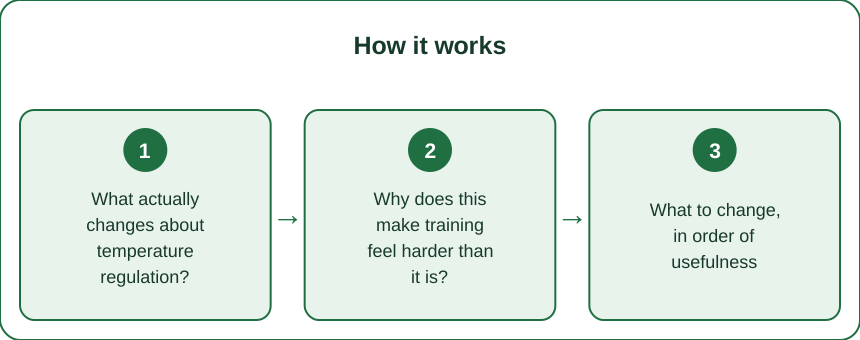
What actually changes about temperature regulation?
The comfortable band narrows.
Body temperature is regulated by the hypothalamus, which maintains a thermoneutral zone — a range of core temperatures within which you neither sweat nor shiver. Oestrogen influences this system, and as levels fluctuate through perimenopause, the prevailing explanation is that this zone becomes narrower.
A narrower zone means two things happen sooner:
- Sweating begins at a lower core temperature. A small rise that previously went unnoticed now triggers a full cooling response.
- Feeling cold arrives sooner too. The zone narrows at both ends, which is why some people alternate between overheating during a session and feeling chilled immediately afterwards.
Exercise raises core temperature by design. That is what training does. With a narrower thermoneutral zone, the same rise crosses the threshold much earlier in the session — often within the warm-up rather than at the peak.
There is a secondary effect worth knowing. The sweating response can be more vigorous once triggered, which means more fluid loss for the same session, and a greater need to think about hydration than previously.
Is a hot flush during exercise the same as an ordinary one?
The mechanism is closely related. Exercise provides the temperature rise that triggers it, which is why the timing feels so tied to sessions.
Why does this make training feel harder than it is?
Because thermal strain is experienced as effort.
When core temperature rises, several things follow that feel exactly like being unfit:
Heart rate climbs for the same work. Blood is redirected to the skin for cooling, which reduces the volume returning to the heart. To maintain output, heart rate rises. Your watch shows a higher number for the same effort, and it is not a fitness signal.
Perceived effort rises steeply. Thermal discomfort and physical effort are not cleanly separated in perception. A session at moderate intensity in an overheated state genuinely feels hard, and that feeling is real information about your state rather than a mistake.
Endurance falls. Time to exhaustion drops measurably as core temperature rises, across essentially all populations. This is not specific to perimenopause; the difference is how quickly you reach the temperature where it starts to matter.
Recovery between efforts slows. Cooling down between intervals takes longer, so the third interval starts from a worse position than it used to.
The practical consequence: many people conclude their fitness has dropped sharply, when what has dropped is their thermal headroom. The distinction matters because the two call for entirely different responses.
How can I tell which one I am dealing with?
Compare a session in a cool environment against the same session in a warm one. If the cool version is close to your previous normal, the issue is thermal rather than fitness.
What to change, in order of usefulness
Start with the environment, then the clothing, then the session.
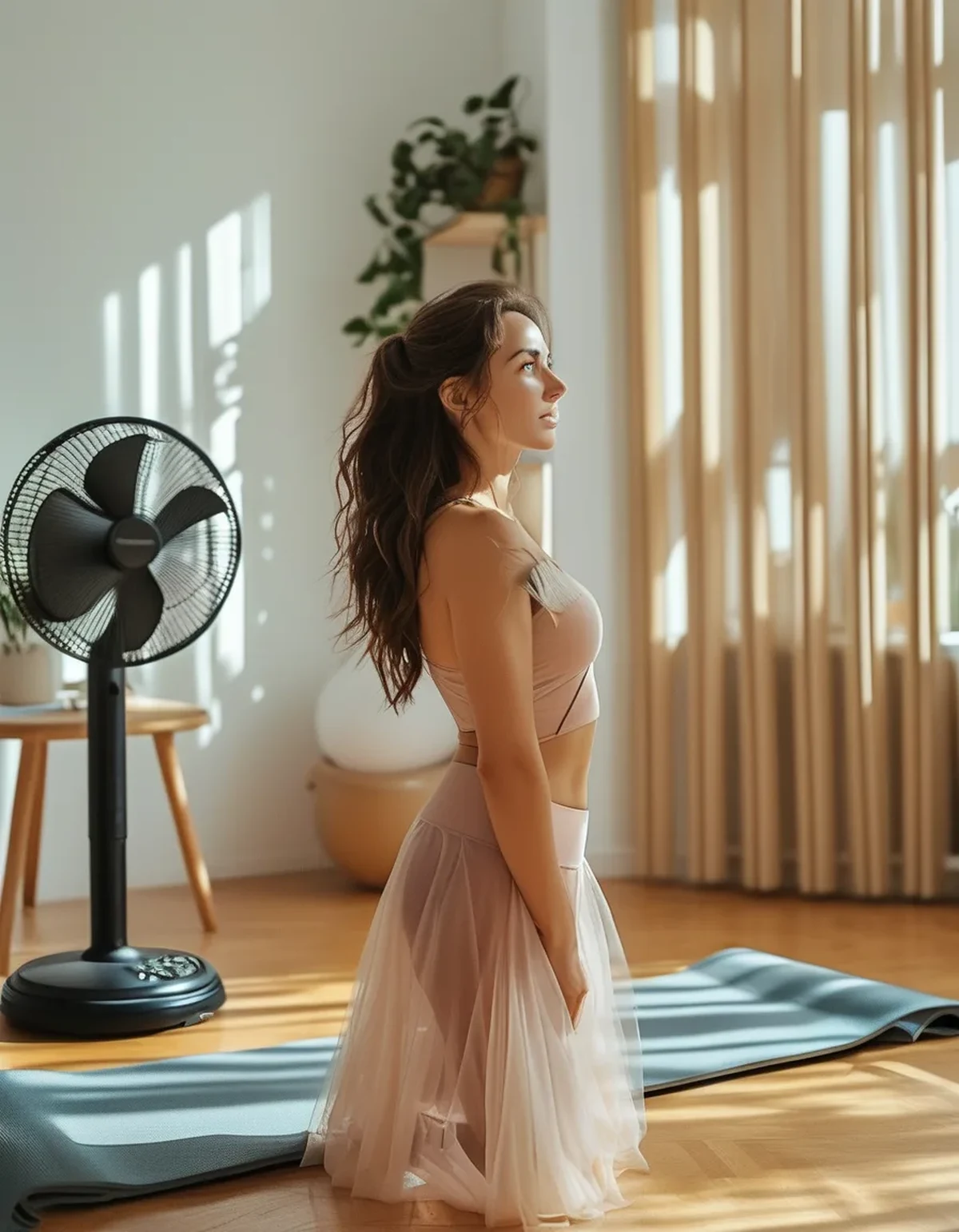
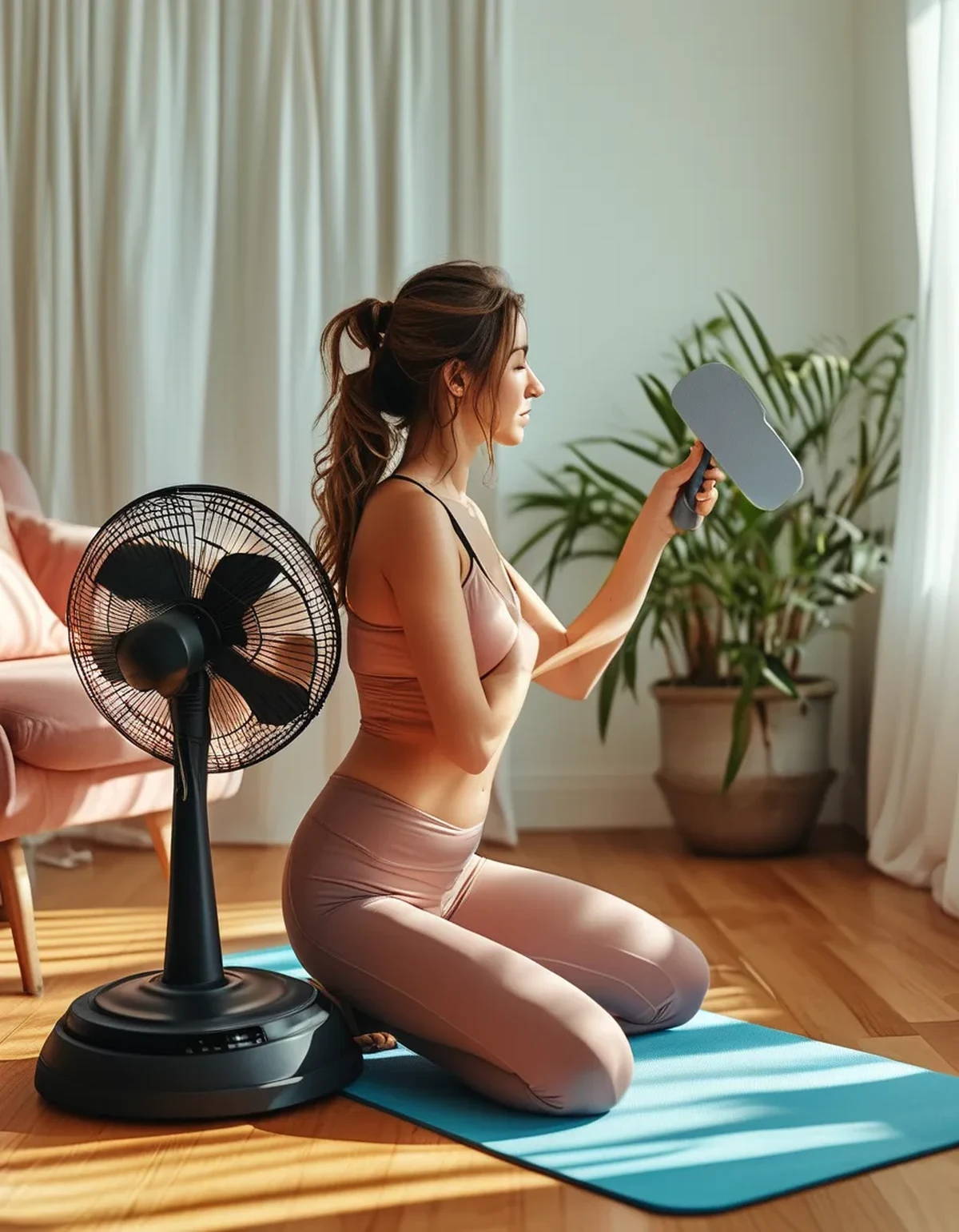
1. Move air across your skin. A fan is the single highest-value intervention and the most consistently underrated. Moving air dramatically increases evaporative cooling, which is the main mechanism by which sweating actually cools you. For home workouts, a decent fan changes the experience more than any programme adjustment.
2. Pre-cool. Starting a session slightly cool buys you thermal headroom before you begin. A cold drink beforehand, a cool shower, or simply not arriving overheated from rushing. The margin you start with is the margin you get.
3. Change what you wear. Loose, genuinely breathable fabric over tight non-technical layers. Sleeveless where you would previously have worn sleeves. Something you can remove mid-session without stopping. Cotton is a poor choice here — it holds sweat against the skin and stops evaporation, which is the exact mechanism you need working.
4. Move the session, not the intensity. Early morning and later evening are meaningfully cooler than mid-afternoon. Shifting the time of day often solves the problem entirely without changing a single thing about the training.
5. Drink more than feels necessary. A more vigorous sweat response means greater fluid loss. Dehydration compounds every one of the effects above, and it is easy to under-drink when your thirst cues have not updated.
6. Adjust the structure last. If the environment is already sorted and sessions are still difficult, longer rests between efforts help more than reducing weight. The recovery interval is where cooling happens.
Should I stop doing hot yoga or high-intensity work?
Not necessarily — plenty of people continue both. Hot environments simply remove all your thermal margin at once, so if you keep them, everything else on this list matters much more.
Myth vs Fact: perimenopause and exercise
Myth: Overheating during workouts means you should train less. Fact: It means you should train cooler. Resistance training and vigorous exercise both have well-supported benefits through this stage — for bone density, muscle mass, and cardiovascular health — and reducing training addresses a symptom by giving up a benefit.
Myth: A higher heart rate for the same effort means fitness has dropped. Fact: Cardiovascular drift from thermal strain raises heart rate independently of fitness. Judging fitness by heart rate in an overheated session is measuring the room.
Myth: Sweating more means you are more out of shape. Fact: Better-trained people sweat sooner and more efficiently as a matter of adaptation. Increased sweating during perimenopause is a thermostat change, and neither version is a fitness signal.
Myth: Only cardio triggers this. Fact: Resistance training raises core temperature too, particularly with short rests and larger movements. Many people notice it most in circuits and supersets.
Myth: It will pass, so there is nothing to do. Fact: It does typically change over time, and the intervening years are long enough that managing it is worthwhile rather than waiting it out.
Myth: Feeling cold after a session is unrelated. Fact: The thermoneutral zone narrows at both ends, so overheating during and chilling afterwards are two ends of the same change. A dry layer to change into afterwards addresses it.
FAQ: Perimenopause Workout Questions, Answered
What temperature should I aim for in a home workout space?
Cooler than feels right when you walk in. If the room is comfortable while you are standing still in normal clothes, it is probably too warm for a session. A fan matters more than the thermostat number.
Does this affect outdoor exercise in autumn?
Autumn is often the easiest season for exactly this reason — cool air provides substantial free thermal margin. Many people find their outdoor sessions improve noticeably from September onward.
Should I track this in any way?
A one-line note about room temperature, time of day, and how the session went reveals the pattern quickly. Most people find their worst sessions cluster in the warmest conditions rather than randomly.
Does hydration really make a measurable difference?
Yes. Dehydration reduces the volume available for both circulation and sweating, so it worsens heart rate, perceived effort, and cooling simultaneously. It is a large lever for a small effort.
What if it is disrupting sleep as well as training?
Sleep disruption during perimenopause is common and has knock-on effects on training tolerance. It is worth discussing with a clinician rather than managing through training adjustments alone.
When should I speak to a doctor?
If symptoms are affecting daily life, if you are unsure whether what you are experiencing is perimenopause, or if you want to discuss treatment options. There are effective approaches available and no reason to work through it unsupported.
TL;DR:
- Fluctuating oestrogen narrows the thermoneutral zone, so sweating and overheating begin at lower core temperatures.
- Thermal strain raises heart rate and perceived effort, which mimics a loss of fitness.
- A fan, pre-cooling, breathable clothing, and a cooler time of day fix more than programme changes do.
- Fluid loss is greater than it used to be, and dehydration compounds every other effect.
- Keep the training — especially resistance work — and change the conditions around it.
The session did not get harder. The margin got smaller, and most of that margin can be bought back with moving air.
This is general information, not medical advice. Discuss persistent or disruptive symptoms with a clinician.
Keep Reading
This article is for general informational purposes only and is not medical advice. Always consult a qualified health professional for guidance specific to you.