Why the Workout Intensity That Used to Work Becomes a Mistake in Perimenopause
Quick Answer: Declining and fluctuating estrogen during perimenopause changes how the body responds to the cortisol spike from high-intensity exercise, meaning a training intensity that used to produce good results in your 30s can now contribute to worsened sleep, increased fatigue, and even stalled progress — moderate intensity with adequate recovery is increasingly emphasized in the perimenopause exercise research.
The workout didn’t change. The hormonal environment it’s landing in did — and that shift can turn an old go-to routine into a source of extra stress rather than the reliable outlet it used to be.

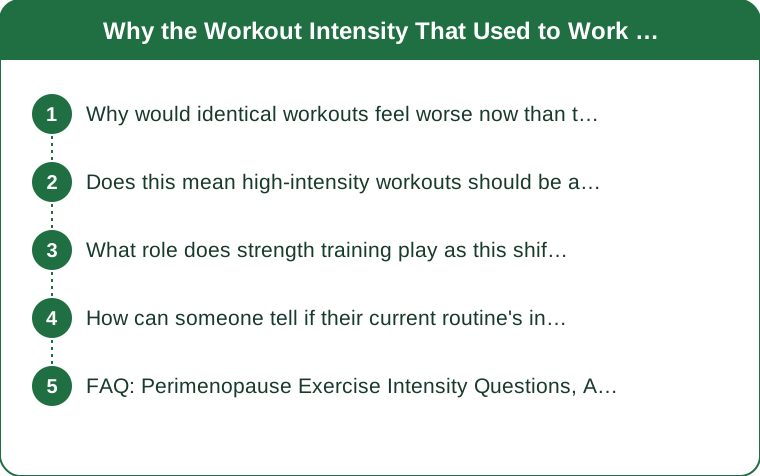
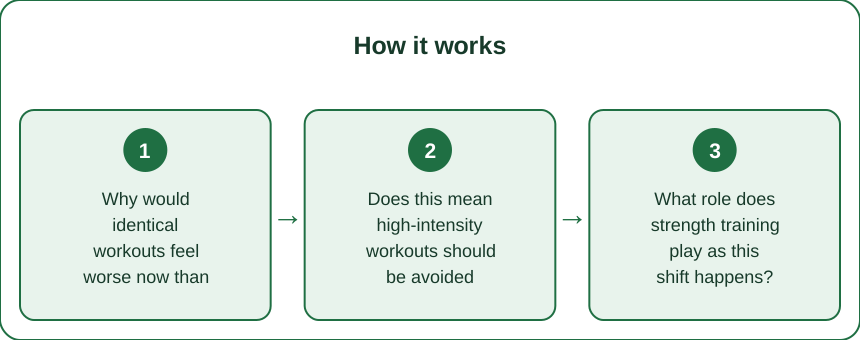
Why would identical workouts feel worse now than they did years ago?
Estrogen plays a role in how the body manages the cortisol response to physical stress, and its decline and fluctuation during perimenopause can blunt this regulatory effect, meaning the same workout intensity can produce a comparatively larger and longer-lasting stress hormone response than it used to.
This is a hormonal shift in stress response, not a fitness decline — it’s a distinct mechanism from simply being less fit or trained than in earlier years.
Does this mean high-intensity workouts should be avoided entirely during perimenopause?
Not entirely — but many specialists in this area now suggest moderating the frequency of very high-intensity sessions and prioritizing adequate recovery between them, rather than eliminating intensity altogether.
The perimenopause-specific workout intensity mistake is usually training at the same frequency and intensity as before without adjusting recovery to match the changed hormonal response, not high intensity itself being inherently wrong.

What role does strength training play as this shift happens?
Strength training becomes an increasingly higher relative priority during perimenopause, given accelerating bone density and muscle mass loss risk during this life stage, distinct from the cortisol-related intensity concern with cardio-style high-intensity training.
This is part of why many perimenopause exercise guidelines now specifically emphasize strength training priority, alongside moderated cardio intensity, rather than treating all exercise types as equally important as before.
How can someone tell if their current routine’s intensity actually needs adjusting?
Persistent poor sleep, increased fatigue that doesn’t improve with adequate rest, or a stalling out of previously reliable progress are practical signs worth paying attention to, rather than assuming any of these are simply unrelated aging symptoms.
Tracking how specific workouts affect same-night or next-day sleep quality can give a fairly direct, individual read on whether a given intensity level is currently working with or against the body.
FAQ: Perimenopause Exercise Intensity Questions, Answered
Should perimenopause workouts avoid intensity altogether and stick only to walking?
No — moderate adjustment, not elimination of intensity, is the general guidance; some higher-intensity work remains valuable, just with more attention to frequency and recovery.
How is this different from general overtraining advice for any age group?
The underlying mechanism (estrogen’s role in cortisol regulation) is specific to the perimenopause hormonal transition, though the practical advice does overlap somewhat with general overtraining prevention.
Should exercise changes during perimenopause be discussed with a healthcare provider?
Yes, particularly if sleep and fatigue issues are significant, since individual hormonal patterns during perimenopause vary considerably. This is general information, not medical advice.
TL;DR:
- Declining estrogen changes how the body regulates the cortisol response to intense exercise
- The mistake is usually unchanged frequency and recovery, not high intensity itself being wrong
- Strength training becomes a relatively higher priority given bone and muscle loss risk at this stage
- Sleep and fatigue patterns after specific workouts offer a practical, individual read on what’s working
The old routine isn’t the enemy — it just needs recalibrating for a hormonal environment that responds to stress differently than it did a decade ago. This is general information, not medical advice.
Keep Reading
This article is for general informational purposes only and is not medical advice. Always consult a qualified health professional for guidance specific to you.