Why Perimenopause Fatigue Hits Hardest in the Mid-Afternoon Specifically
Quick Answer: Mid-afternoon fatigue during perimenopause often overlaps with a natural circadian dip most people experience around 2-4pm, but fluctuating estrogen levels during perimenopause can amplify that normal dip significantly — affecting blood sugar stability, sleep quality the night before, and core body temperature regulation — making the afternoon crash feel far more pronounced than the mild energy dip most people without hormonal fluctuation experience at the same time of day.
A 2pm energy dip happens to almost everyone to some degree. During perimenopause, that same normal dip can feel like hitting a wall — and fluctuating estrogen is the reason why.

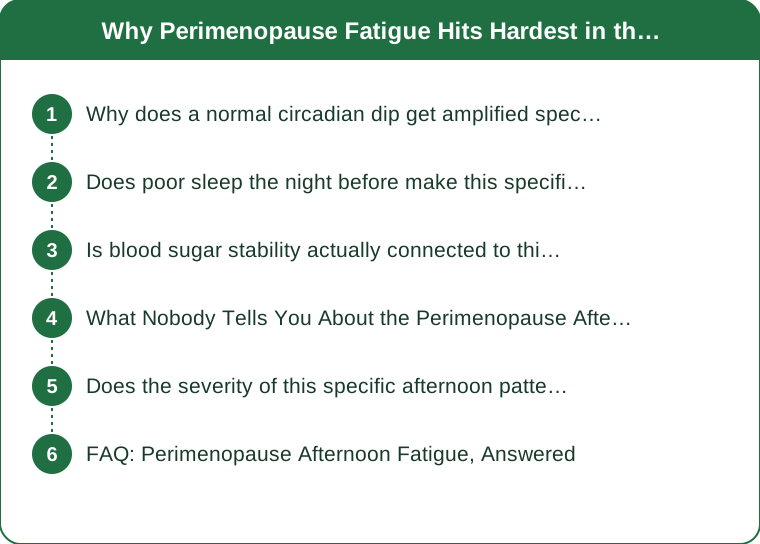
Why does a normal circadian dip get amplified specifically during perimenopause?
Estrogen influences several systems tied to energy regulation, including blood sugar stability and body temperature control, and as estrogen fluctuates unpredictably during perimenopause rather than following a stable pattern, the body has less reliable regulatory support during the natural afternoon dip window, allowing that ordinarily mild dip to feel considerably more severe.
Does poor sleep the night before make this specific afternoon window worse?
Yes, and perimenopause itself often disrupts sleep quality through night sweats or fragmented sleep, creating something of a compounding cycle — accumulated sleep debt is generally most noticeable during the body’s natural low-alertness window in the afternoon, meaning perimenopause-related sleep disruption and the afternoon energy dip reinforce each other.
Is blood sugar stability actually connected to this timing, or is it purely hormonal?
Both are connected — estrogen fluctuation affects insulin sensitivity somewhat, and a typical lunch eaten a few hours before the 2-4pm window can produce a more pronounced post-meal blood sugar dip than it would outside of perimenopause, compounding with the hormonal and circadian factors already at play during that specific window.

What Nobody Tells You About the Perimenopause Afternoon Crash
Many people assume the fix is more caffeine exactly when the crash hits, but caffeine timed into the afternoon dip window can interfere with that night’s sleep quality, worsening the next day’s crash in a cycle — a short walk, protein-forward snack, or brief rest tends to address the underlying dip more sustainably than caffeine timed right into it.
Does the severity of this specific afternoon pattern change as perimenopause progresses?
It can vary considerably person to person and even week to week, since estrogen fluctuation itself is inherently irregular during perimenopause rather than following a predictable trajectory, meaning some weeks may show a much more pronounced afternoon dip than others without an obvious external cause.
FAQ: Perimenopause Afternoon Fatigue, Answered
Is it worth eating lunch earlier to reduce this afternoon dip?
Some people find a slightly earlier, protein-forward lunch reduces the post-meal blood sugar dip that can compound with the natural afternoon low, though individual results vary and this isn’t a guaranteed fix.
Should a short nap be avoided or embraced during this window?
A short nap (15-20 minutes) earlier in the dip window, rather than caffeine, is often better tolerated and less likely to disrupt nighttime sleep than a nap taken too late or caffeine consumed during the same window.
Does exercise timing affect how severe this specific crash feels?
A brief walk specifically during the dip window, rather than skipping activity entirely, is associated with a modest but real improvement in afternoon alertness for many people, hormonal fluctuation aside.
This is general information, not medical advice — persistent or severe fatigue during perimenopause is worth discussing with a healthcare provider.
TL;DR:
- A normal 2-4pm circadian energy dip gets amplified by fluctuating estrogen during perimenopause
- Sleep disruption from perimenopause and the afternoon energy dip can compound and reinforce each other
- Blood sugar dips after lunch land in the same window, adding another contributing factor
- A short walk, protein-forward snack, or brief rest tends to help more sustainably than caffeine timed into the crash
If 2-4pm consistently feels like hitting a wall, that’s a recognized perimenopause pattern, not a personal failing — and a few small timing adjustments can meaningfully soften it.
Keep Reading
This article is for general informational purposes only and is not medical advice. Always consult a qualified health professional for guidance specific to you.