The Perimenopause Workout Mistake That Makes Everything Feel Harder
Quick Answer: The same workout feels harder in perimenopause because dropping estrogen slows recovery and blunts heat regulation, not because your fitness declined. The fix is more rest between hard sessions, not more effort inside them.
You did the exact workout you’ve done for years and walked out wrecked. Heart racing, overheated, sore for three days instead of one. That’s not you getting weaker — it’s your recovery window quietly getting longer, and most training plans never adjust for it.

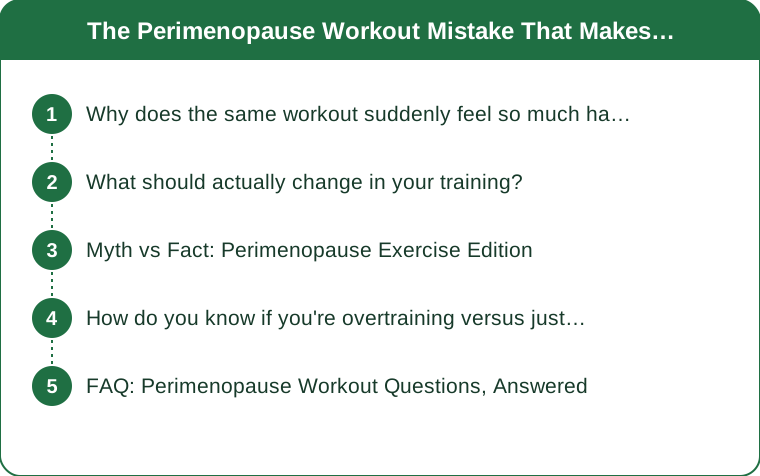
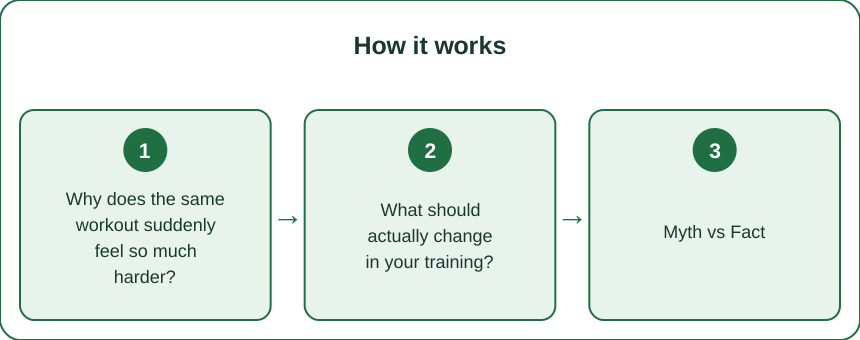
Why does the same workout suddenly feel so much harder?
Estrogen helps regulate body temperature and muscle repair. As it drops, you overheat faster and repair slower — the workout intensity hasn’t changed, but your recovery cost for it has roughly doubled.
This is why a session that used to leave you fine the next day now leaves you sore for 48-72 hours. It’s a timing problem, not a fitness problem.
What should actually change in your training?
Rest, not intensity. Keep your strength sessions hard, but add a full recovery day between them instead of back-to-back training.
A realistic week: 2 strength days, 1 day fully off between each, 1-2 easy walks or mobility days filling the gaps. Cardio stays but shifts toward zone 2 (conversational pace) rather than repeated high-intensity intervals, which spike cortisol on top of an already taxed recovery system.

Myth vs Fact: Perimenopause Exercise Edition
Myth: You have to push harder to fight muscle loss. Fact: Strength training frequency matters more than intensity here — 2-3 sessions a week beats 5 exhausting ones that you can’t recover from.
Myth: Feeling wrecked means the workout worked. Fact: Feeling wrecked for 3 days means your recovery ratio is wrong, not that the workout was effective.
Myth: Cardio should stay high-intensity to manage weight. Fact: Excess high-intensity cardio in perimenopause can raise cortisol enough to work against you — steady zone 2 work is often the better lever.
How do you know if you’re overtraining versus just adjusting?
Track resting heart rate and sleep quality for 2 weeks. A resting heart rate that stays elevated 5+ beats above your normal, plus poor sleep, is your signal to cut volume, not push through.
Hot flashes triggered specifically by workouts (versus randomly through the day) are also a heat-regulation flag — cooler workout times (morning) and lighter layers help more than people expect.
FAQ: Perimenopause Workout Questions, Answered
Should I stop strength training in perimenopause?
No — strength training becomes more important, not less, for protecting bone density and muscle mass. The change is in recovery spacing, not whether you lift.
Why am I so much more sore than I used to be?
Slower muscle repair from declining estrogen means the same soreness now takes longer to clear. Add a rest day between hard sessions rather than pushing through.
Does hydration actually help with the overheating?
Yes — electrolyte-inclusive hydration measurably helps with perimenopause heat regulation during exercise, more so than plain water alone.
TL;DR:
- Workouts feel harder because recovery slows, not because fitness dropped
- Add a full rest day between hard strength sessions
- Shift excess high-intensity cardio toward zone 2
- Track resting heart rate and sleep — sustained elevation means cut volume
This is general information, not medical advice — talk to a doctor about significant symptom changes.
Keep Reading
This article is for general informational purposes only and is not medical advice. Always consult a qualified health professional for guidance specific to you.