Why Falling Back Asleep After a Night Sweat Gets Harder During Perimenopause
Quick Answer: A night sweat triggers a sharp cortisol and adrenaline response as part of the body’s temperature-regulation reaction, which can leave you feeling alert rather than sleepy even after the physical heat has passed — that lingering alertness, not the sweat itself, is often the bigger barrier to falling back asleep.
The sweat fades in a few minutes. The wide-awake feeling that follows it can last much longer, and that gap is where a lot of perimenopause sleep disruption actually happens.
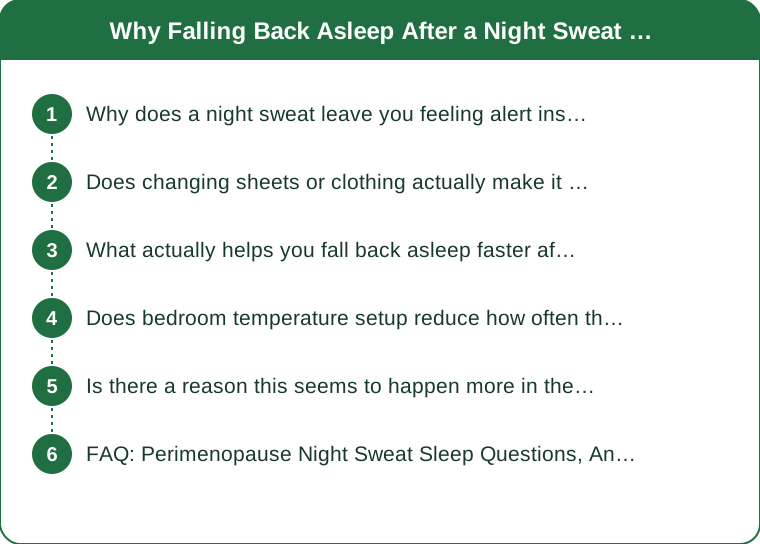
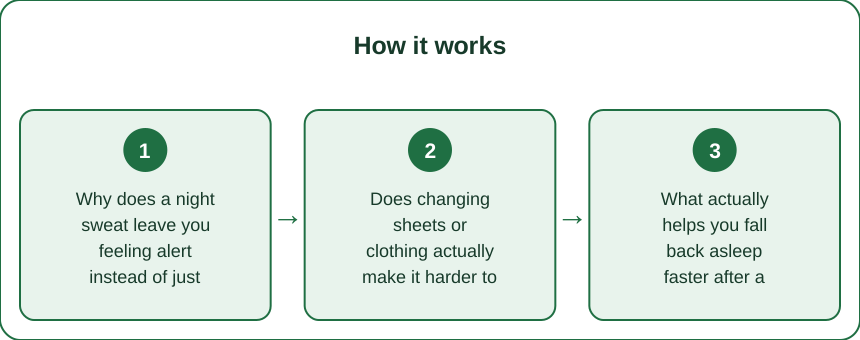
Why does a night sweat leave you feeling alert instead of just sweaty?
The body’s response to a hot flash or night sweat involves a brief but real spike in cortisol and adrenaline, part of the same physiological cascade that produces the temperature change itself — that hormonal spike doesn’t fade as quickly as the physical sweat, leaving a lingering wired feeling.
Does changing sheets or clothing actually make it harder to fall back asleep?
It can, somewhat — the physical activity and full wakefulness required to change damp sheets or clothing further activates the nervous system right when you’re trying to wind back down, compounding the alertness from the hormonal spike itself.
What actually helps you fall back asleep faster after a night sweat?
Slow, deliberate breathing (a longer exhale than inhale) for a few minutes directly counters the adrenaline-driven alertness, and having a backup layer or cooling towel prepared in advance reduces the amount of full wakefulness required to manage the physical discomfort.

Does bedroom temperature setup reduce how often this cycle happens?
Yes, meaningfully — moisture-wicking sheets, a cooler room temperature, and layered rather than single-heavy bedding reduce both the frequency and intensity of night sweats, which in turn reduces how often this wake-and-can’t-resettle cycle occurs at all.
Is there a reason this seems to happen more in the early morning hours specifically?
Yes — cortisol naturally rises somewhat in the hours before typical waking time as part of the normal circadian rhythm, and this natural rise can compound with a hot flash’s hormonal spike, making early-morning night sweats particularly disruptive to falling back asleep.
FAQ: Perimenopause Night Sweat Sleep Questions, Answered
Should I get out of bed if I can’t fall back asleep after a night sweat?
If more than 20-30 minutes pass without drowsiness returning, briefly getting up for a calm, low-light activity can help more than lying awake frustrated, then returning to bed once sleepy.
Do certain foods or drinks before bed make night sweats worse?
Alcohol and spicy food close to bedtime are commonly reported triggers for some people, worth testing individually since triggers vary.
Is it worth discussing frequent night sweats with a doctor?
Yes, especially if they’re significantly disrupting sleep — there are both lifestyle and medical options worth discussing. This is general information, not medical advice.
TL;DR:
- A night sweat triggers a cortisol and adrenaline spike that lingers well after the physical heat passes
- Changing sheets or clothing can further activate alertness right when you’re trying to resettle
- Slow, deliberate breathing directly counters the adrenaline-driven wakefulness
- Cooler bedroom setup and moisture-wicking bedding reduce how often the cycle happens at all
Next time a night sweat wakes you, try a few minutes of slow breathing before reaching for anything else — it addresses the alertness that’s actually keeping you awake.
Keep Reading
This article is for general informational purposes only and is not medical advice. Always consult a qualified health professional for guidance specific to you.