Why Perimenopause Fatigue Hits Hardest in the Mid-Afternoon (Not Morning or Evening)
Quick Answer: Mid-afternoon fatigue during perimenopause is commonly linked to a combination of natural circadian dip (which everyone experiences to some degree) compounding with fluctuating estrogen’s effect on blood sugar regulation and sleep quality from the night before — making the normal afternoon slump considerably more pronounced than it was pre-perimenopause.
If your energy has started crashing hard specifically in the early-to-mid afternoon during perimenopause, that’s a commonly reported pattern with a specific, identifiable set of contributing factors.

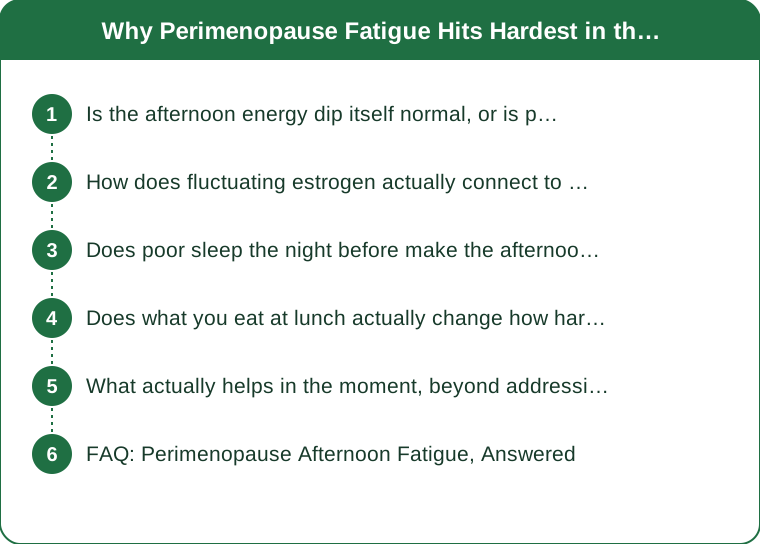
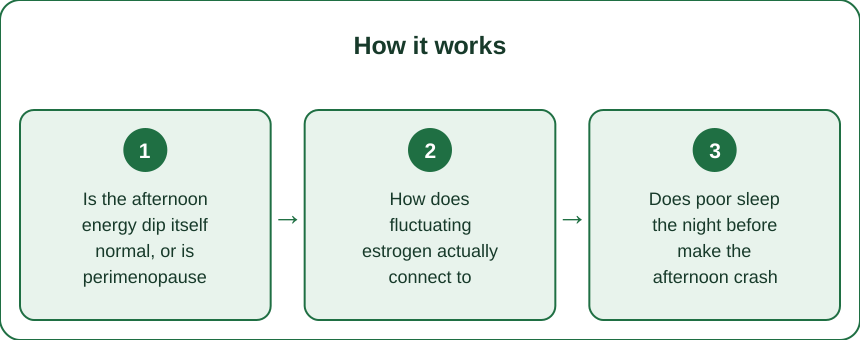
Is the afternoon energy dip itself normal, or is perimenopause creating something new?
A mild circadian dip in alertness during the early-to-mid afternoon is a normal part of everyone’s daily rhythm, regardless of hormone status — what changes in perimenopause is the magnitude of that dip, which several compounding factors specific to this transition can amplify significantly beyond the baseline everyone experiences.
How does fluctuating estrogen actually connect to afternoon energy specifically?
Estrogen has a role in insulin sensitivity and blood sugar regulation, and its fluctuation during perimenopause can make blood sugar dips (including a common post-lunch dip) more pronounced than they’d otherwise be — this compounds directly with the natural circadian afternoon low point, creating a more noticeable combined crash.
Does poor sleep the night before make the afternoon crash specifically worse?
Significantly — perimenopause is commonly associated with disrupted sleep (night sweats, more frequent waking), and accumulated sleep debt tends to manifest most noticeably during the body’s already-lower-alertness afternoon window rather than evenly throughout the day, which is part of why the afternoon specifically bears the brunt of a rough night.

Does what you eat at lunch actually change how hard the afternoon crash hits?
For many people, yes — a lunch heavy in refined carbohydrates can produce a more pronounced blood sugar spike-and-drop pattern, which compounds with the hormone-related blood sugar sensitivity discussed above. A lunch with more protein, fiber, and moderate complex carbohydrates is commonly recommended to blunt this specific compounding effect.
What actually helps in the moment, beyond addressing root causes?
A short walk, brief exposure to natural light, and staying hydrated are the most consistently recommended in-the-moment strategies — physical movement and light exposure both have a direct, relatively fast effect on alertness that can meaningfully soften an afternoon dip, more reliably than caffeine alone for many people.
FAQ: Perimenopause Afternoon Fatigue, Answered
Does exercising earlier in the day help reduce the afternoon crash?
Many people report this helps, likely through both improved sleep quality and more stable blood sugar regulation earlier in the day, though individual response varies.
Is it worth talking to a doctor about the afternoon crash specifically, or is it just expected?
It’s common enough to be considered a typical perimenopause symptom, but if it’s significantly disrupting daily function, discussing it with a doctor is worthwhile — some symptom management options exist.
Does caffeine timing matter for managing this specific pattern?
Using caffeine earlier rather than reaching for more in the afternoon is generally recommended, since late caffeine can further disrupt the sleep that’s already commonly affected during perimenopause.
This is general information, not medical advice — a doctor familiar with perimenopause can help assess whether additional evaluation or symptom management makes sense for you.
TL;DR:
- Everyone has a natural afternoon circadian dip, but perimenopause commonly amplifies it
- Fluctuating estrogen’s effect on blood sugar regulation compounds with that natural dip
- Disrupted overnight sleep, common in perimenopause, worsens the afternoon crash specifically
- A protein-forward lunch, brief movement, and natural light are the most effective in-the-moment fixes
The afternoon crash isn’t random or a discipline problem — it’s several perimenopause-related factors stacking on top of an already-normal daily dip.
Keep Reading
This article is for general informational purposes only and is not medical advice. Always consult a qualified health professional for guidance specific to you.